
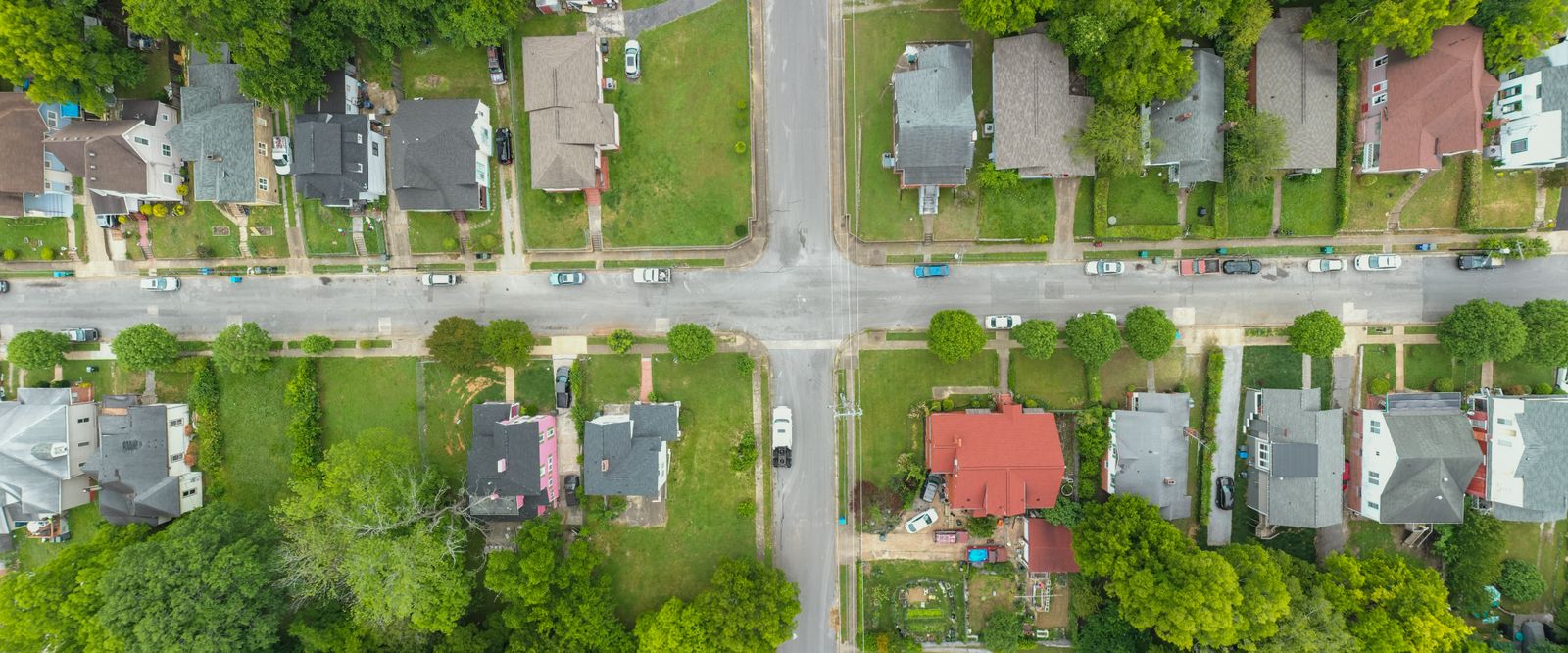
Almost every week someone opening a care home hears the same thing. You cannot buy that house, there is already a facility down the street, and you have to be 300 feet away. It gets repeated by real estate agents, by city staff, and by other operators.
For an RCFE, it is wrong. There is no 300 foot rule for a residential care facility for the elderly in California. The rule is real, but it belongs to a different type of license, and people mix the two up because both kinds of homes look the same from the sidewalk.
Where the 300 foot rule comes from
The rule is in Health and Safety Code section 1520.5, part of the California Community Care Facilities Act. It covers adult residential facilities, or ARFs, along with group homes and other community care facilities. It says the state will deny an application for a new residential facility license when the location would create what the law calls overconcentration, meaning the new facility would sit 300 feet or less from an existing one, measured from the outside walls of each building. The section also requires the Department to notify the local planning agency at least 45 days before approving one of these applications, and it lets a city or county ask for a denial based on overconcentration.
Why it does not apply to an RCFE
Two reasons, and both are simple.
First, RCFEs are licensed under a completely different chapter. Your license comes from the Residential Care Facilities for the Elderly Act, Health and Safety Code section 1569 and the sections that follow, along with Title 22, Division 6, Chapter 8. Read the application rules in Title 22 section 87155 and the review rules in section 87157 and you will not find a distance requirement anywhere. Section 87157 lists what the state must complete before issuing your license: a review and on site survey of the property, a determination of your qualifications, a fire clearance from the State Fire Marshal, and compliance with the RCFE law and regulations. No spacing. No proximity test.
Second, and this settles it, section 1520.5 subdivision (f) says in so many words that foster family homes and residential facilities for the elderly shall not be considered in determining overconcentration, and that license applications for those facilities shall not be denied on that basis.
What a city can and cannot do about it
A city cannot bring the rule in through the back door either. If your facility serves six or fewer residents, Health and Safety Code section 1569.85 says it is a residential use of property, and the residents and operators are treated as a family under any zoning ordinance about residential use. That same section says no conditional use permit, zoning variance, or other zoning clearance can be required of your facility unless the city requires it of every other home of that type in that zone. Section 1569.86 adds that no fire clearance or permit can be denied because you did not follow a local rule you were exempt from in the first place. Section 1569.82 goes further and states the policy of California is that every city and county shall permit and encourage enough of these facilities to meet local need.
What to do when someone tells you otherwise
Ask one question first: which license are you talking about? If the property down the street is an ARF, a group home, or another community care facility, section 1520.5 may matter for that operator, but it is not your rule.
If someone at a city counter tells you a 300 foot separation applies to your RCFE, ask them to show you the ordinance or code section in writing. Then point to section 1520.5 subdivision (f), and to sections 1569.85 and 1569.86.
Buying the wrong house because of a rule that does not apply to you is an expensive mistake, and so is walking away from the right one. This is the kind of thing we clear up every week. NCPI trains administrators for both RCFE and ARF licenses, so we know which rule belongs to which license, and we prepare the full RCFE facility application and mail it to you to sign and submit for $1,199.99, or $999.99 for returning students. The ARF version is coming soon at the same price. Our family has been doing this for 30 years.




Comments
[…] RCFE license is not a general business permit. Section 87158(a) says the license is issued for a maximum number of residents who can receive care […]