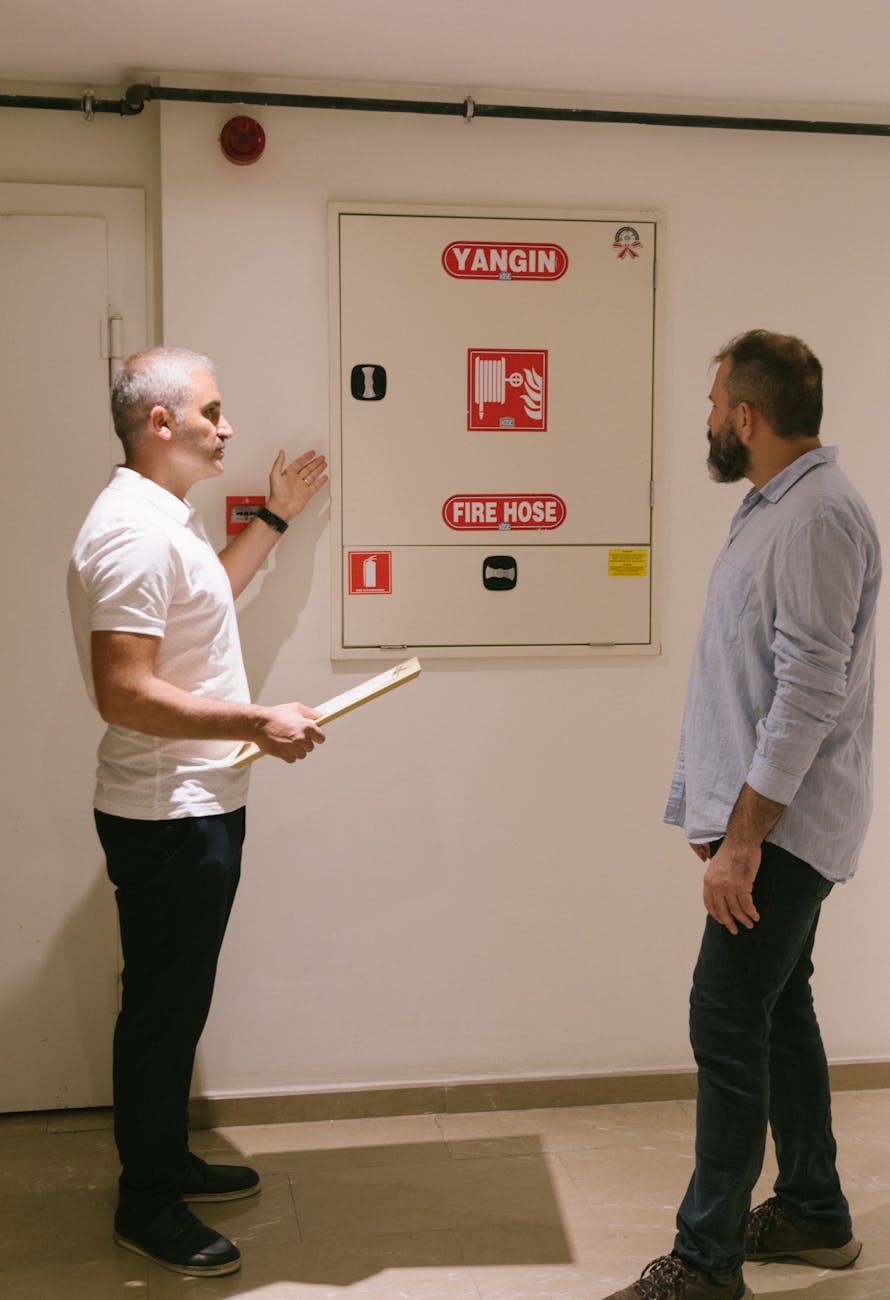
Why a Fire Marshal Pre-Inspection Can Save Your RCFE Months of Delays
One of the strongest recommendations I make in my RCFE classes is to request a pre-inspection by the Fire Marshal before submitting a license application. It’s a step many people skip, usually to save time or money, but in practice it often does the opposite. Skipping a pre-inspection is one of the most common reasons RCFE applications get delayed.
A pre-inspection is an informal or preliminary walkthrough conducted by the local fire authority before the official inspection tied to licensing. Its purpose is simple: to identify fire and life-safety deficiencies early, while you still have time to correct them without pressure. It costs around $150-$200 but depends where you are located.
This matters because once you submit an RCFE application to the California Department of Social Services, the process automatically triggers a formal fire inspection. That inspection is no longer exploratory. At that point, the Fire Marshal is there to determine whether the property meets the requirements for the capacity and resident type you are applying for.
If everything is already compliant, the inspection can move quickly. If it’s not, the licensing process slows down, sometimes significantly.
During a pre-inspection, the Fire Marshal may point out issues that are not obvious to owners or administrators. These can include door widths that do not meet clearance requirements, exit pathways that need modification, the absence of ramps, improper handrails, insufficient turning radius for mobility devices, or construction features that are acceptable for a private home but not for an RCFE. These requirements vary depending on the specific property, the number of residents, and whether residents are ambulatory or non-ambulatory.
When these issues are discovered during a pre-inspection, you still have flexibility. You can make changes strategically, price out modifications, and plan construction without the pressure of an active licensing timeline. When the same issues are discovered during the official inspection, everything slows down. Corrections must be made, reinspections scheduled, and approvals reissued before licensing can continue.
This is where delays often snowball. Something as simple as widening a door, modifying a bathroom, or building a ramp can take weeks or months depending on contractors, permits, and inspections. Meanwhile, your RCFE application is essentially paused.
Another mistake administrators make is assuming that what worked for another facility will automatically work for theirs. Fire requirements are not one-size-fits-all. They depend on the local fire authority, the layout of the building, the slope of the lot, the age of construction, and the capacity being requested. A pre-inspection helps you understand how the rules apply to your specific property, not someone else’s.
The goal of a pre-inspection is not to make the process harder. It’s to make it smoother. By identifying deficiencies early, you can ensure that when the Fire Marshal conducts the official inspection triggered by your application, the property is already up to code. That single step can shave months off the licensing timeline.
The takeaway is straightforward. Submitting an RCFE application starts the clock. If the Fire Marshal arrives and the property is not ready, the process slows down. If the property is already compliant, everything moves faster. A pre-inspection gives you control over that outcome.